

MARIUPOL, THE FIRST RESIDENCY
The first full development of ALASKA took place in Mariupol in summer and autumn 2021.
The project was developed through the Marathon of International Residencies organised by GogolFest and DAKH Theatre as part of the Big Cultural Capital project in Mariupol.
The work was created through interviews, questionnaires, research and devised theatre with members of the first theatre school-studio of Mariupol.
The young participants spoke about loneliness, friendship, love, sexuality, depression, abuse, family relationships, war and collective trauma about the violence that had already become part of everyday life.
Their personal testimonies became part of a theatrical language that also brings together literature and poetry.
THE JOURNEY CONTINUES
After the destruction of the theatre, the project continued through new encounters and collaborations across Europe.
In Berlin, the work was presented with Ukrainian artists living in Europe, creating a new space for the group to remain connected through theatre.
In 2025, ALASKA entered a new transnational phase through Perform Europe, travelling to Poland, Bosnia and Herzegovina and Hungary.
In each country, the work was developed through a new residency process with local young people and Ukrainian artists.
WHEN THE THEATRE WAS DESTROYED
Although much of the material for ALASKA had been created before February 2022, the performance emerged from a city that had already been living with war since 2014.
The full-scale Russian invasion changed the reality of the artists, their city and their theatre.
The theatre was destroyed. The artistic community was scattered across Ukraine and Europe.
ALASKA became one of the projects through which the company could continue its artistic life, carrying the voices and experiences of Mariupol beyond the city itself.


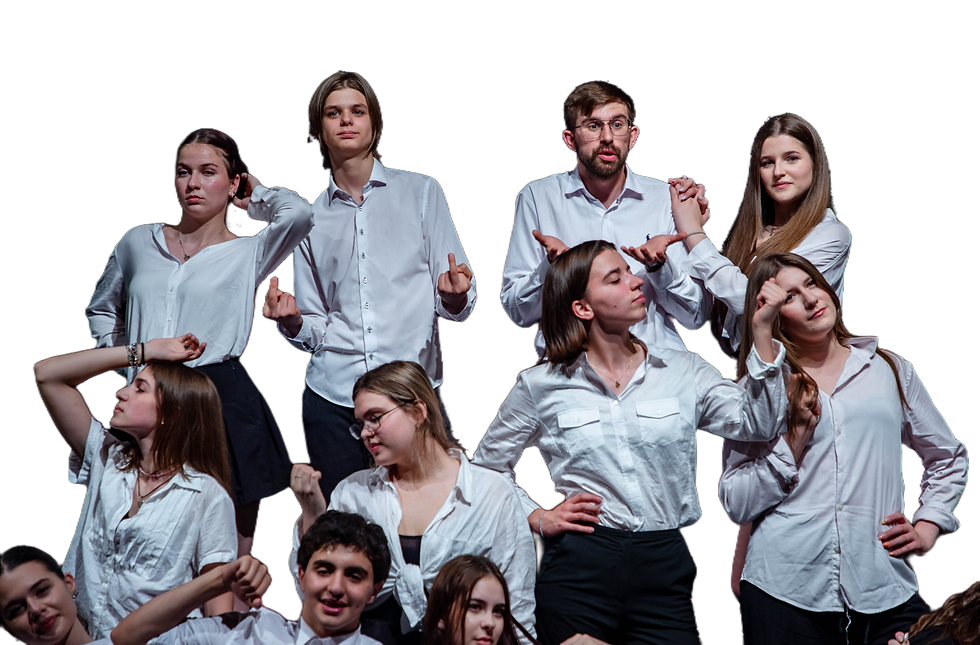
ALASKA is a devised-documentary, polyglot performance created from the voices, experiences and questions of young people from Mariupol.
At the centre of the work is Stefania, also known as Alaska, a young girl forced to leave Mariupol because of war and enter an unfamiliar world. Her story becomes a starting point for a wider exploration of loneliness, friendship, love, sexuality, depression, abuse, family, war and collective trauma.
But ALASKA is more than a story about one young person.
It is a performance that changes with every place it enters.

A play about the pursuit of happiness and security in an abusive world.
ALASKA

WHERE IT BEGAN
ALASKA began in Greece in 2021, where the first stage of the project was developed with the National Theatre of Greece.
The idea was then brought to Mariupol, where it became deeply connected to the young people and the reality of the city.
A PERFORMANCE THAT TRAVELS BY CHANGING
ALASKA does not exist as one fixed touring production. It is an evolving transnational performance model.
Each time the work travels to a new place, it is recreated with local participants and, where possible, Ukrainian artists living in the host country. Workshops become a space for research, exchange and creation. New voices, testimonies and experiences are then integrated into the original performance.
The result is a work that changes from place to place while remaining connected to its original story.

GDANSK · POLAND
In February 2025, ALASKA was developed during a seven-day artistic residency at the Gdańsk Shakespeare Theatre.
Young artists from Poland, Ukraine and other backgrounds joined the process and worked together with Evangelos Kosmidis and the Ukrainian ensemble.
The residency created a new multilingual version of the performance, with material from the workshops becoming part of the work.
The public presentation in Gdańsk became another chapter in the evolving journey of ALASKA.
SARAJEVO · BOSNIA AND HERZEGOVINA
In Sarajevo, the project continued its process of exchange with local young performers and the Ukrainian ensemble.
The performance was recreated through another residency and encounter, bringing together different languages, experiences and perspectives.
The Sarajevo version was presented at Sarajevo War Theatre in June 2025.
HUNGARY
The journey continued in Hungary, where ALASKA was once again developed with local participants and Ukrainian artists.
The process combined workshops, collective creation and performance, allowing the work to continue evolving through a new group of people and a new cultural context.

MANY LANGUAGES - MANY VOICES
ALASKA is a multilingual work.
Across its different versions, the performance has encountered Ukrainian, Greek, Russian, Polish, Italian, Hungarian, Bosnian and other languages of the places where the project has travelled.
Language is not simply a translation tool. It becomes part of the dramaturgy itself, carrying different memories, identities and ways of expressing experience.
At the heart of ALASKA are real voices.
The original material was created through interviews, questionnaires and conversations with young people from Mariupol.
Their thoughts and experiences meet fictional storytelling, monologues, literature and poetry.
The performance brings together personal questions about love, friendship, loneliness, family, war and the meaning of life with a wider reflection on what it means to grow up in a violent world.
THE ALASKA METHOD
RESEARCH
The process begins with listening.
Interviews, questionnaires and conversations allow the team to gather personal experiences and questions connected to the place and the people involved.
WORKSHOP
When ALASKA arrives somewhere new, local participants enter the process.
Through workshops, improvisation and collective work, new material is created.
ENCOUNTER
The project brings together Ukrainian artists and people from the place where the performance is being developed.
Their experiences meet rather than simply being presented side by side.
DEVISING
The material created during the process becomes part of the performance.
The original structure remains, while new voices and perspectives reshape it.
PERFORMANCE
The result is a new multilingual version of ALASKA, performed by the Ukrainian ensemble together with local participants.
CONTINUATION
The process does not end with the performance.
Each new place leaves something behind - new material, new relationships, new questions and new possibilities for the work to continue.
ALASKA is not a finished object.
Its form continues to change as it encounters new people and new places.
The project carries the memory of Mariupol while creating space for new stories to enter it.
Every new version becomes part of the wider journey of the work.

ADDITIONAL LINKS